
Nutrition
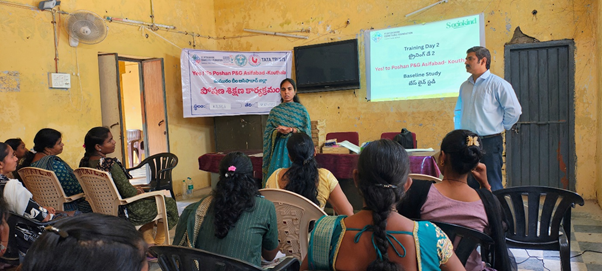
About the Assessment: The Yes to Poshan program, supported by Procter & Gamble (P&G), aims to improve maternal and child nutrition by promoting dietary diversity, strengthening behaviour change communication (BCC), enhancing the capacities of Anganwadi Workers and Poshan Sakhis, and improving Infant and Young Child Feeding (IYCF) practices among Pregnant & Lactating Women (PLW) and families.
The program is currently being implemented in 20 villages of Koutala Mandal in Kumuram Bheem Asifabad District, Telangana, targeting pregnant women, lactating mothers, children below five years and adolescent girls.
The baseline assessment was conducted to establish benchmark values for all key program indicators, understand existing nutritional practices, identify implementation barriers and opportunities and provide evidence for refining implementation strategies.

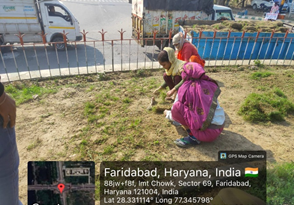
About the Project: The “Greening Faridabad” project supported by V Guard Industries (V Guard Foundation) aimed to address the pressing environmental and socio-economic challenges in Faridabad, Haryana. This project focused on increasing green cover, improving soil health, conserving water, promoting biodiversity and engaging the local community in sustainable practices.


While the approach varies depending on the program that is being evaluated, there are four main elements that are needed to measure SROI:
As CSR and sustainability practices continue to evolve, corporates cannot afford to stop at making investments-they must also demonstrate the positive change their efforts create. Measuring SROI ensures that every rupee invested contributes to lasting, meaningful social transformation.
SROI is an outcomes-based approach that seeks to understand and, where feasible, assign monetary values to selected social, environmental, and economic outcomes relative to the investment required to create them.
Conventional financial ROI focuses on financial gains relative to investment. SROI incorporates selected social, environmental, and economic outcomes that may not appear in financial statements, using financial proxies and explicit assumptions to estimate their value.
An SROI ratio expresses estimated social value relative to the investment assessed. For example, a ratio of 3:1 would indicate an estimated ₹3 of social value for every ₹1 invested within the defined assessment scope and assumptions. It does not mean that ₹3 in cash was generated or received.
The requirements depend on the intervention. Common inputs include program expenditure, stakeholder information, outputs, outcome indicators, evidence of change, and relevant information for financial proxies and impact adjustments. Data gaps should be documented and considered when interpreting the result.
It can be useful for many types of interventions, but suitability depends on whether meaningful outcomes can be evidenced and whether defensible monetary proxies can be identified. In some cases, a conventional impact assessment or another evaluation approach may be more appropriate.
We identify suitable financial proxies based on the nature of the outcome, available evidence, relevant market or non-market valuation information, and transparent assumptions. The choice of proxy is documented so that clients can understand how the valuation was developed.
Deadweight refers to change that would have happened anyway. Attribution considers the contribution of other organizations or factors. Displacement examines whether a benefit occurs at the expense of another outcome or group. Drop-off refers to the reduction of outcomes over time. Their treatment depends on the assessment scope and available evidence.
No. Ratios can be influenced by assumptions, the outcomes included, valuation choices, time horizons, and data quality. SROI should be interpreted alongside outcome evidence, stakeholder experience, methodological limitations, and the strategic relevance of the intervention.
It can contribute to investment discussions when the studies use sufficiently comparable boundaries, methods, time horizons, and assumptions. Ratios from different assessments should not be compared mechanically without examining these differences.
LET’S CREATE MEANINGFUL CHANGE TOGETHER
Copyright © 2026 Sociokind | All Rights Reserved.
Designed by DigiVend